Govt rules out snap vote after election-law setback
We don’t intend to end our experience in govt, proud of stability we’ve given says Ciriani
Relations with Parliament Minister Luca Ciriani on Wednesday knocked back opposition calls for snap elections after the coalition supporting Premier Giorgia Meloni’s government lost an important vote in the Lower House regarding a bill for a new election law on Tuesday.
‘We don’t intend to end our experience in government and we are proud of stability we’ve given the country,” Ciriani told Skytg24.
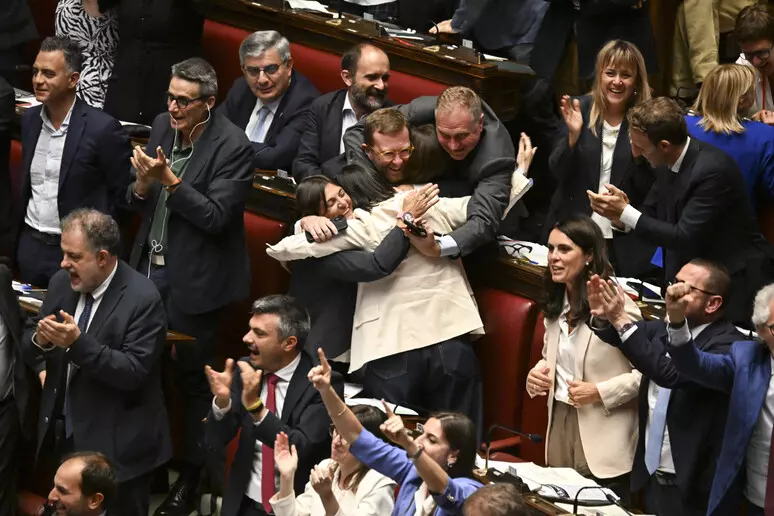
An amendment to the bill presented by Meloni’s right-wing Brothers of Italy (FdI) with two small centrist parties, NM and UDC, and supported by the other parties in the ruling coalition to give voters the option to express preferences about candidates on electoral lists was rejected in a secret ballot with 187 votes in favour and 188 against.
The government has a big majority in the Lower House.
Ciriani said between 20 and 25 “sniper” lawmakers belonging to the ruling majority broke ranks and voted against the amendment, covered by anonymity thanks to it being a secret vote.
On Tuesday Meloni said the rejection of the amendment on preferences was a “missed opportunity for Italian people”, adding that it was “the right thing to try” and that the “quagmire” of politics had won again.
The opposition has cried foul about the ruling majority’s drive to overhaul the electoral system, saying they are changing it because they fear losing the general election set to take place next year and want to minimize the chances of this happening.
The bill would see the current system, a mix of first-past-the-post and proportional representation, replaced with a proportional-representation system with bonus seats for a coalition that obtains at least 42% of the vote to ensure it has a working majority in parliament.
The coalition that comes first and crosses the threshold gets 70 extra seats in the Lower House and 35 in the Senate.
If no coalition reaches the 42% threshold, or the votes for the Lower House and the Senate produce different results, a purely proportional system is used.
The FdI-NM-UDC amendment would have given voters the option to express preferences for up to three candidates on a list.
The opposition said the amendment gave voters “fake preferences” as the head of the ticket would always be “blocked”, arguing this was also be a step back for equality, as, in theory, it would be possible for all the ticket heads to be men.
“This was a vote against the arrogance of a woman leader who was willing to crush the power of other women in other to defend her own,” said Elly Schlein, the leader of the opposition, centre-left Democratic Party (PD).